Mechanically Attached TPO
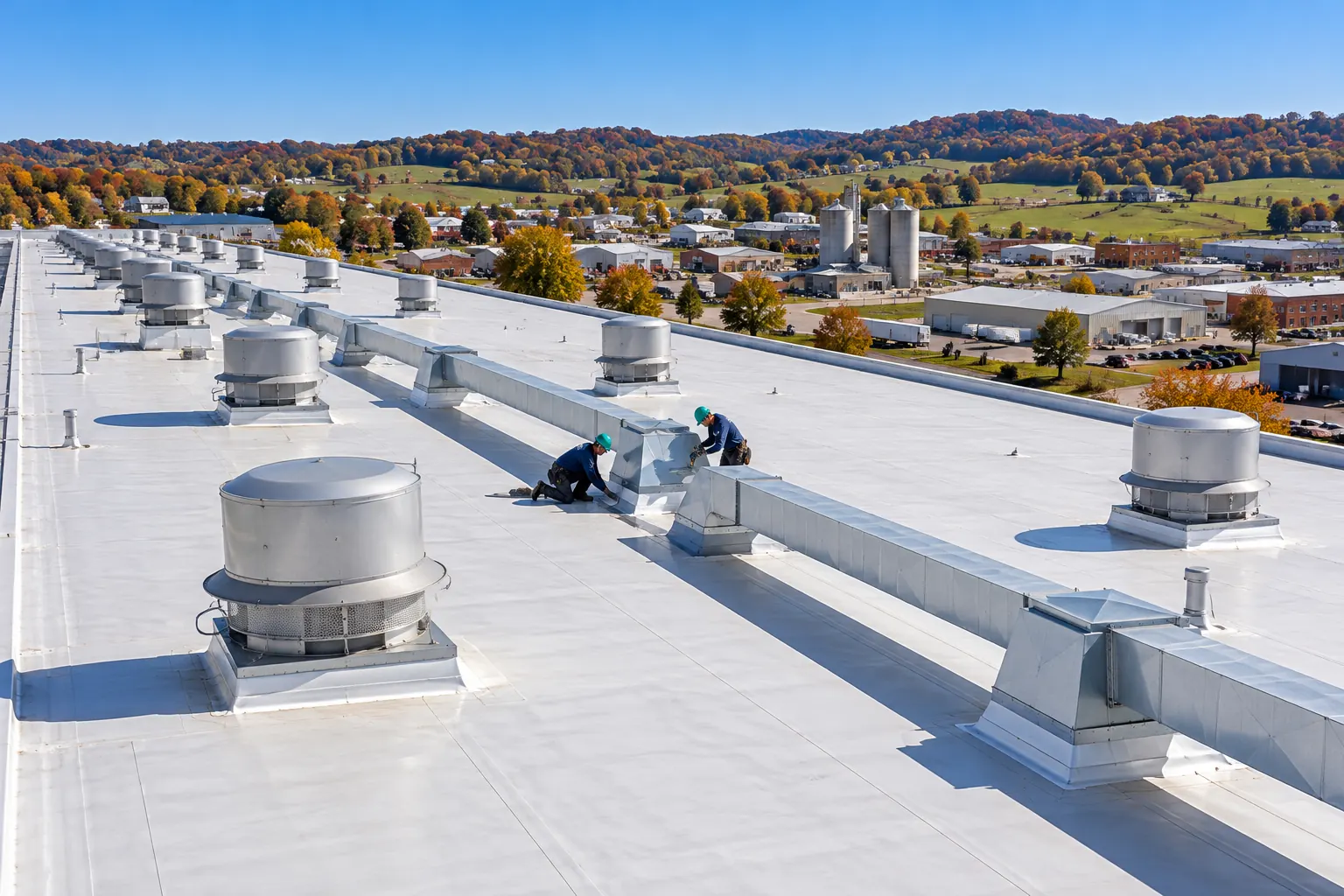
Plates and screws hold the sheet inside each seam lap, with tighter spacing in corners and along the perimeter where uplift is strongest.
Fits: Steel decks and large open roofs with a firm deck for fasteners.
TPO Roofing
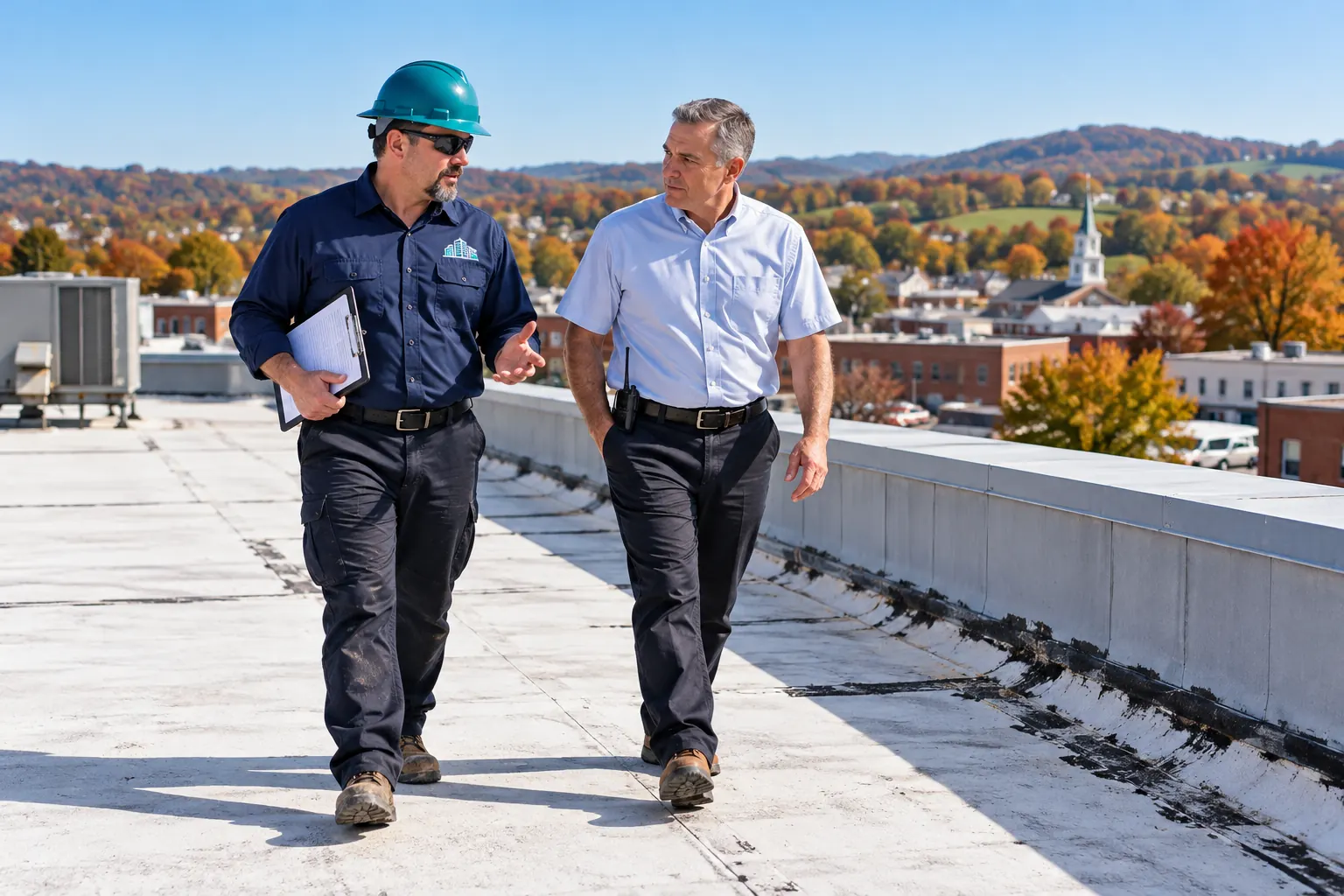
As a Winchester TPO roofing contractor, we install white, heat-welded TPO on warehouses, offices, and stores, either over a dry existing roof or after a full tear-off.
Your First Visit
Is This Roof A Fit?
A Winchester TPO roofing contractor compares the three single-ply membranes before recommending one, because seams and grease exposure differ.
Ready For TPO
These conditions often lead owners to a new TPO roof, either as a recover or after a tear-off.
A black or gravel roof over offices that run air conditioning hard all summer.
Coping and drip edge rusting along the perimeter of an aging membrane.
Leaks lined up with old seam rows across the ceiling grid.
Water at rooftop units whose curbs sit too low for another layer.
Adhesive seams on an older roof opening at the edges of each roll.
Alligatored built-up or modified bitumen roofs ready for a cover board and new sheet.
TPO Options
Attachment method, sheet thickness, and recover or tear-off are set by the deck, the wind exposure, and what the core cuts show.
Plates and screws hold the sheet inside each seam lap, with tighter spacing in corners and along the perimeter where uplift is strongest.
Fits: Steel decks and large open roofs with a firm deck for fasteners.
Bonding adhesive holds the whole sheet down, which suits roofs crowded with curbs. Air intakes get shields while the adhesive cures to keep odor out.
Fits: Windy edges and roofs with many rooftop units.
A cover board goes over one dry, well-attached layer, then new TPO. Edge metal, curb flashing, and drain clamping rings are reworked to the new height.
Fits: Roofs with one layer and dry insulation at every core cut.
Thicker TPO puts more material over the scrim. A 60 mil sheet is a common middle choice; heavier sheet pays off around units that get frequent service.
Fits: Warehouse roofs with regular foot traffic to equipment.
Benefits
TPO earns its place on Winchester warehouses and offices through its seams and its surface.
The Main One
Hot-air welds melt each lap into the next roll, and every weld is probed once it cools. Crews often cut a test sample at the start of each day to confirm welder heat and speed before welding the field.
A white surface reflects sunlight, so the roof runs cooler than a dark membrane.
Wide rolls cover large decks with fewer laps to maintain over the years.
Damage is fixed by welding on a new piece of matching TPO.
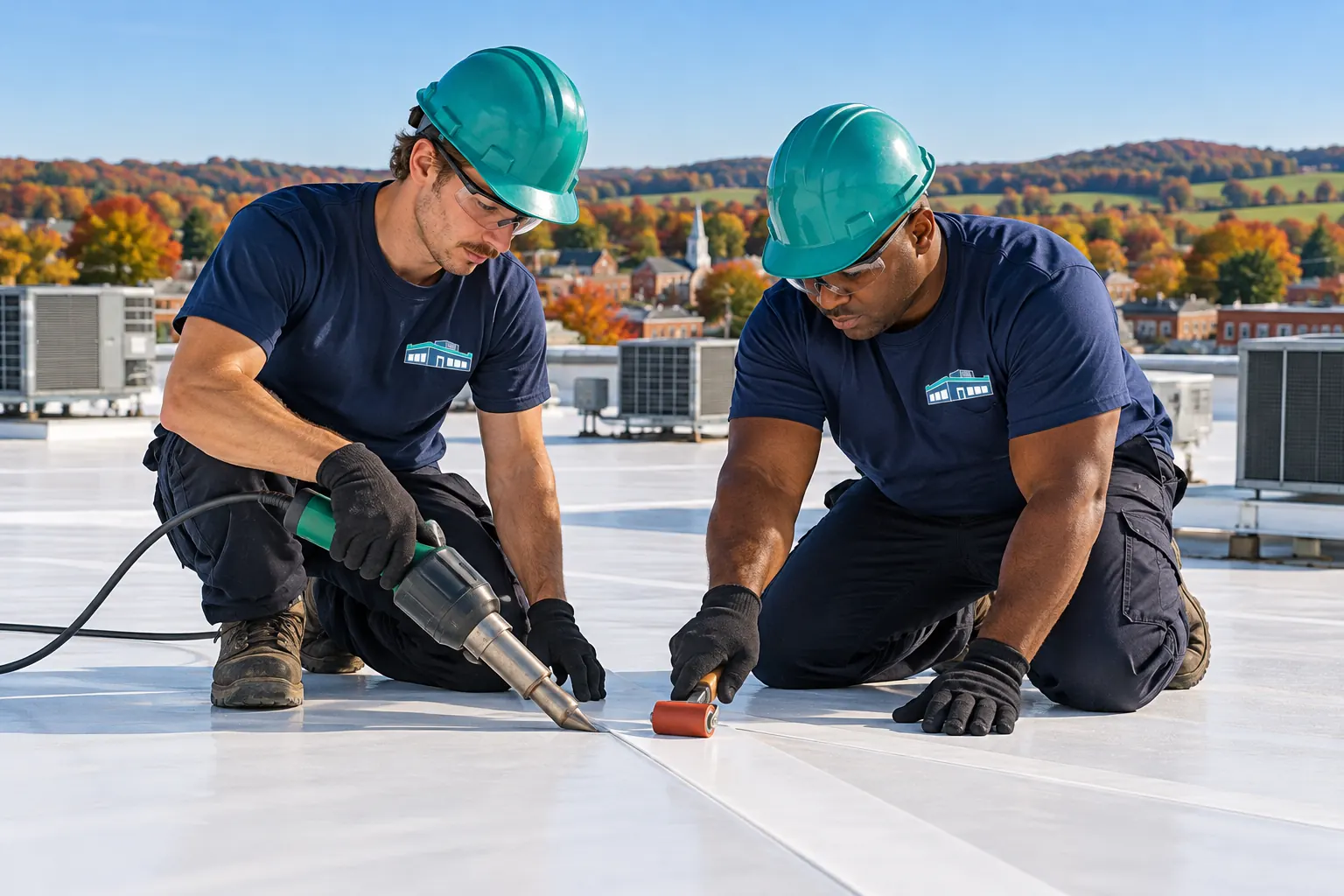
Call and tell us the roof type, about how many layers are on it, and where leaks show up. That shapes whether TPO goes over it or the old roof comes off.
Installation Steps
Each decision is made in order, from the deck up.
A moisture scan and a few core cuts come first. Building code limits recovers over wet roofs and roofs with two layers, so the cores decide whether TPO goes over or the old roof comes off.
Wet insulation trapped under fresh TPO keeps the deck damp and pushes up blisters. Dry, attached roofs can stay as a base; anything else is removed down to the deck.
Steel decks often take mechanically attached sheet. Roofs with many curbs or exposed edges often go fully adhered. Ballast is used only where the structure carries the weight.
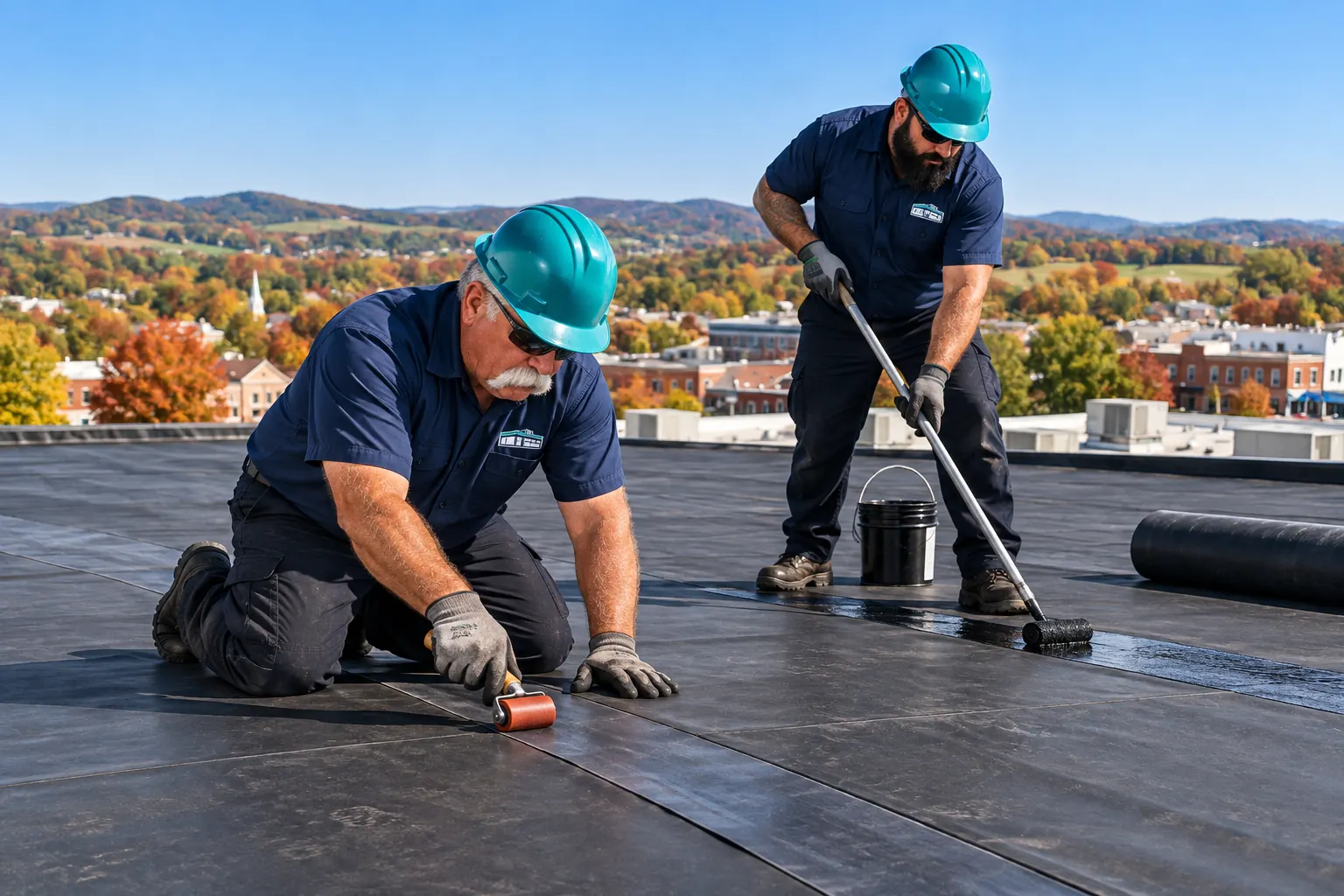
Rolls are welded, each seam is probed with a hand tool after it cools, and TPO flashing goes up parapets, curbs, and pipes, finished with edge metal that holds the sheet down.
Related Services
TPO is one of several options for a low-slope roof. These two often come up in the same conversation.
Rubber EPDM suits roofs where cold-weather flexibility or a ballasted design matters more than a white surface.
Compare EPDM roofing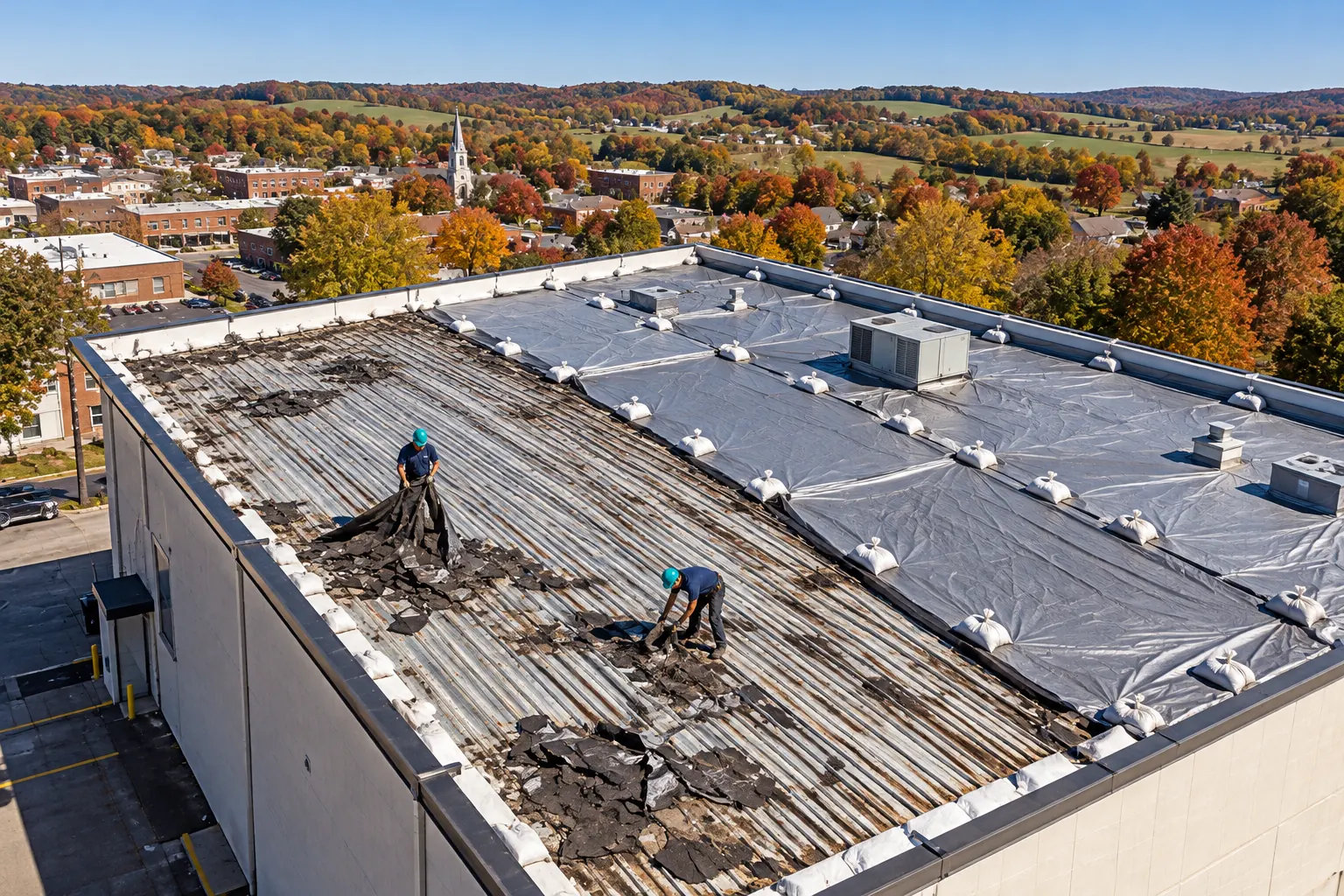
If the deck ponds, the slope gets fixed with tapered insulation before any membrane goes down.
Flat roof drainage and replacementTPO FAQ
TPO is a single-ply thermoplastic membrane whose laps are welded with hot air into one continuous sheet. Owners of warehouses and offices pick it for two reasons: welded seams and a white surface that reflects summer sun. For TPO roof installation in Winchester, KY, the sheet is welded to matching TPO flashing at walls, curbs, and pipes.
It depends on the deck, wind exposure at the corners, and how much adhesive odor the building can handle. Mechanically attached vs fully adhered TPO comes down to this: plates and screws suit steel decks and big open roofs, while adhesive suits windy edges and crowded roofs. Ballast needs a strong frame and deep parapets.
For TPO membrane thickness on a warehouse roof, 60 mil is a common middle choice. Heavier sheet adds cushion against foot traffic, hail, and weathering, which matters around units that get service visits and on buildings you plan to keep. A firm cover board under the sheet matters just as much.
Every welded seam is probed with a blunt hand tool once it cools, and any gap is rewelded right away. Inspectors also walk field seams, inside and outside corners at parapets, pipe boots, curb wraps, and termination bars under the coping. Many crews cut a daily test sample to confirm welder settings.
Yes, when the old roof is dry, firmly attached, and only one layer deep. A TPO recover over an existing roof in Kentucky gets a cover board between the old surface and the new sheet. A moisture scan and core cuts come first, and edge metal, curb flashing, and drain rings are reworked to the new height.
Send the address and roof details. We start with core cuts and a written TPO scope.