The Main One
Lifts And Loads Clear Of The Lines
With the utility contacted and the crane swing set away from overhead wires, materials go up and debris comes down without stopping work, and the service entrance gets reflashed in the same pass.
Commercial Roofing · Camargo, KY
Count on a Camargo commercial roofing contractor who calls the utility and plans crane swing and dumpster spots around overhead lines before the tear-off starts.
Your First Visit
Staging Near Power Lines
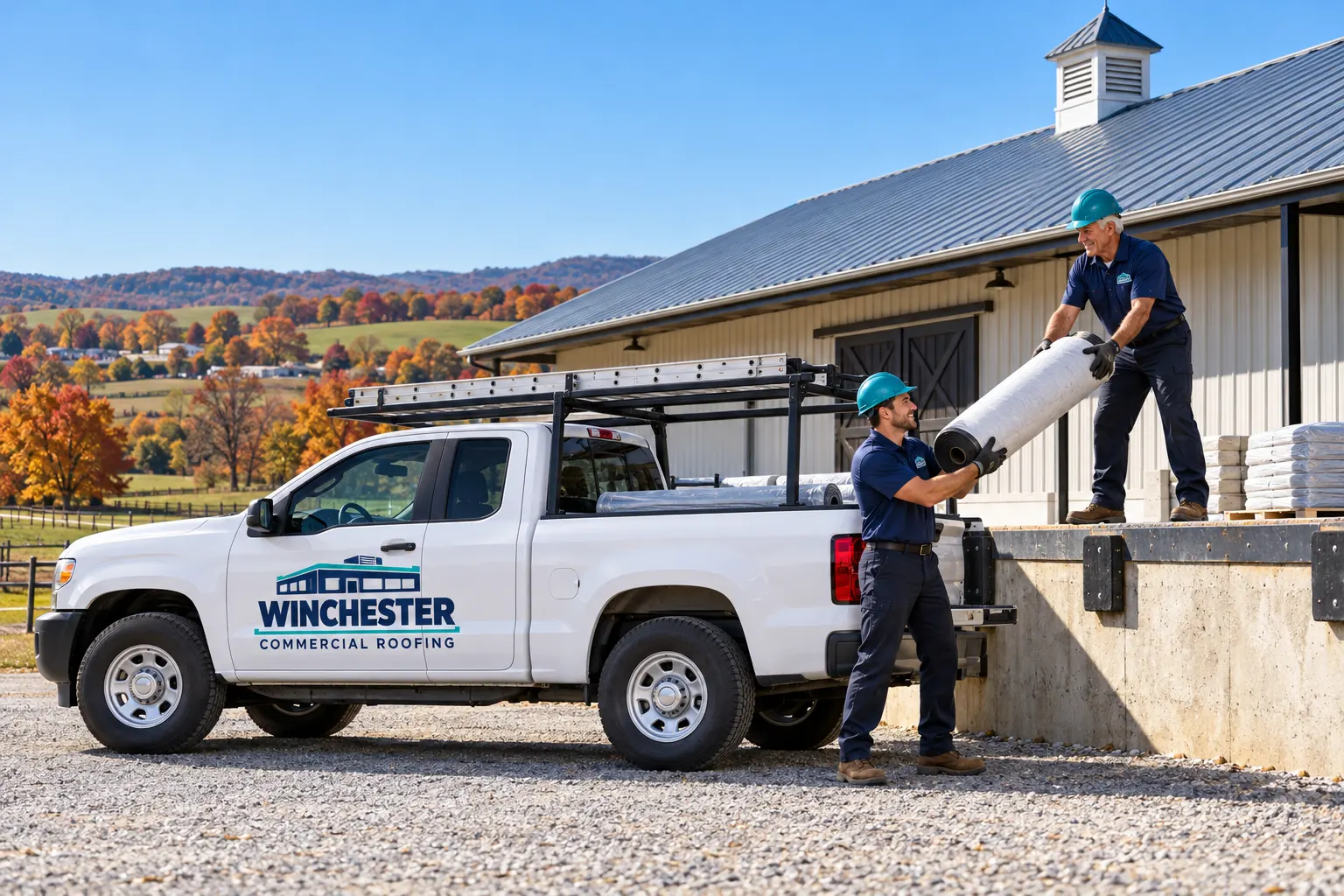
A Camargo commercial roofing contractor makes two calls before a tear-off. The first goes to the electric provider named on the bill; the East Kentucky Power Cooperative list shows Clark Energy serving Montgomery County.
The second goes to the Kentucky HBC for the building permit, since Montgomery County relies on the state office. With both settled, the dumpster and crane can be scheduled.
Signs To Watch
These are the conditions that usually lead to a full tear-off, which is when staging matters most.
Overhead wires crossing near the eave where materials would go up.
Perimeter metal rusted through along the walls.
Leaks spread across the building, not tied to one curb or drain.
Dark or rusty steel under areas of wet insulation.
An older recover on top of the original roof.
Insulation that gives underfoot across large sections.
Benefits
A tear-off planned around power lines and site access runs safer and wraps up cleaner.
The Main One
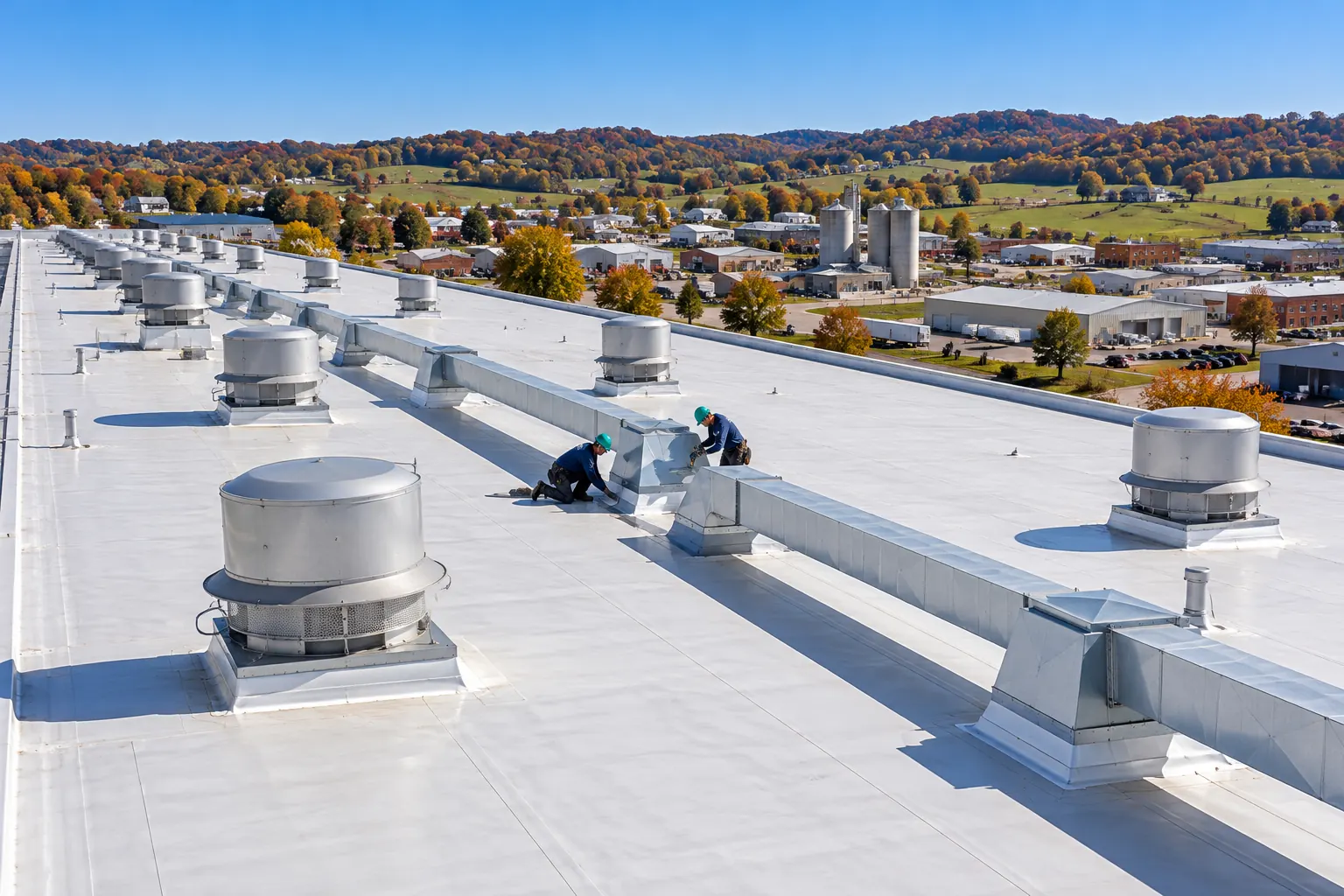
With the utility contacted and the crane swing set away from overhead wires, materials go up and debris comes down without stopping work, and the service entrance gets reflashed in the same pass.
Old roof debris goes down a chute into a container away from your doors.
Rusted steel is cut out before new insulation goes down.
Exposed decks get insulation to the level the state confirms.
Roof Options
Most Camargo tear-offs end with one of these systems.
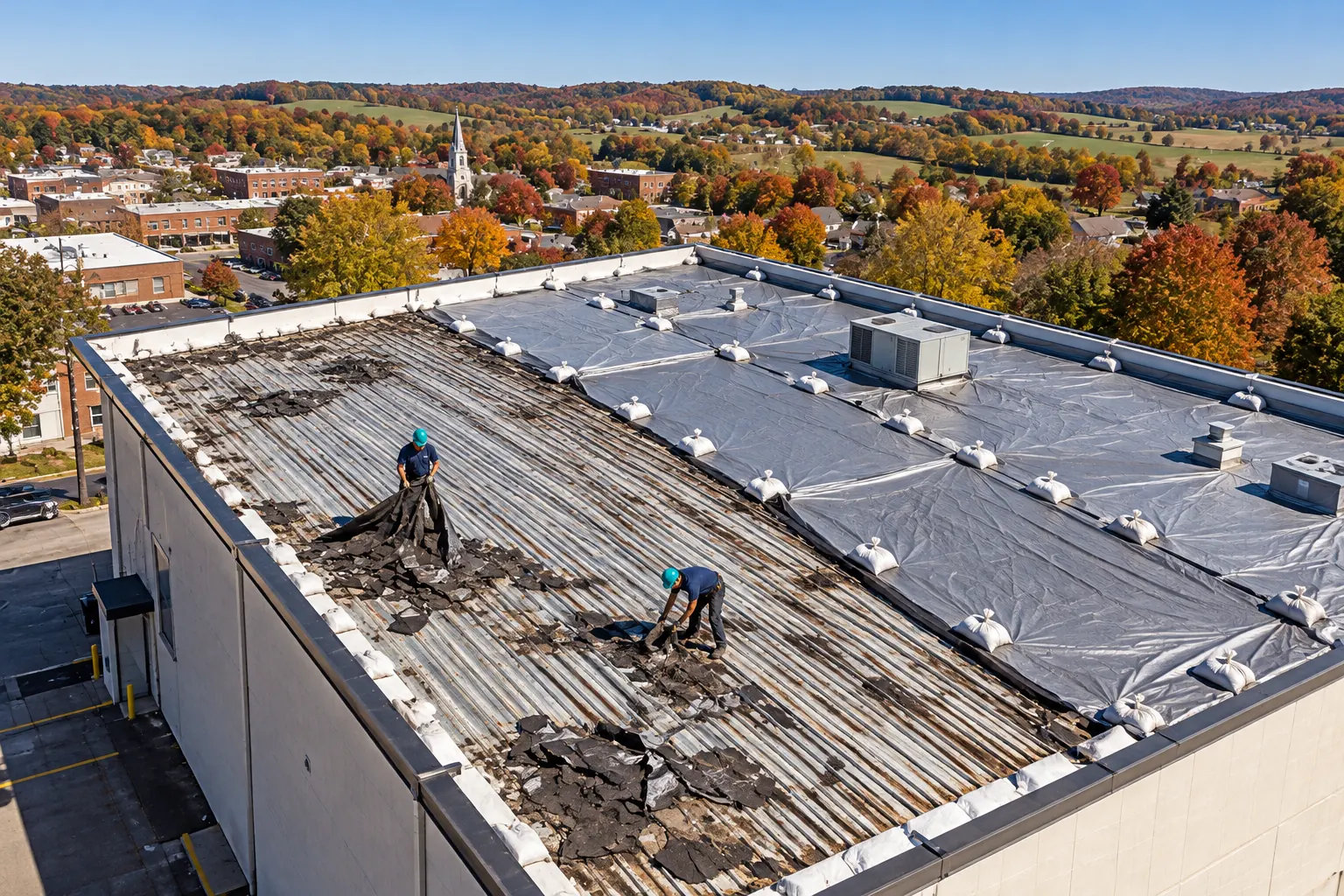
A flat roof replacement strips both layers, repairs the deck, and adds tapered insulation and drains.
Fits: Roofs with two layers or wet insulation.

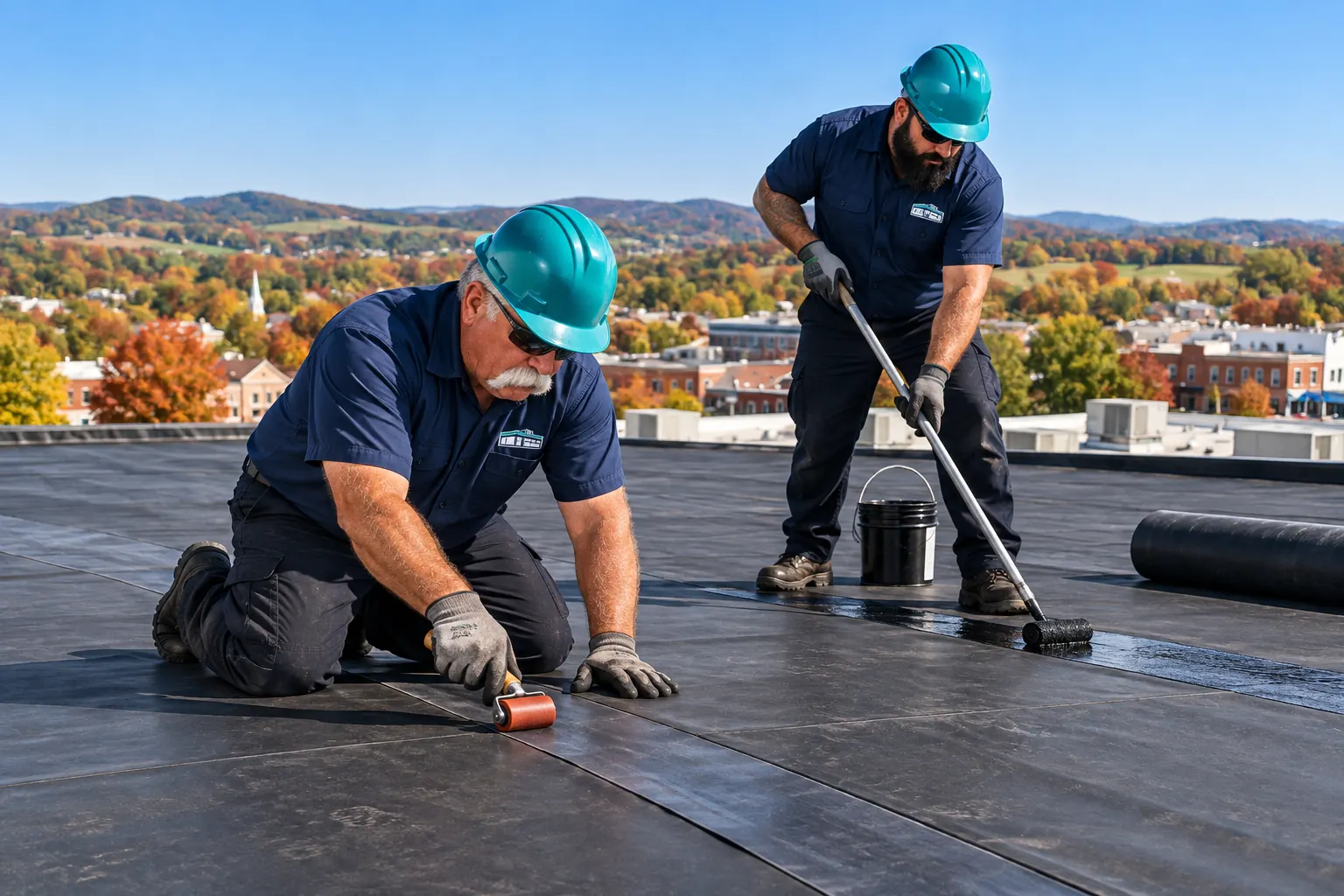
TPO roofing goes on once the deck and insulation are set, with new edge metal at the finished height.
Fits: Offices and warehouses with low-slope decks.
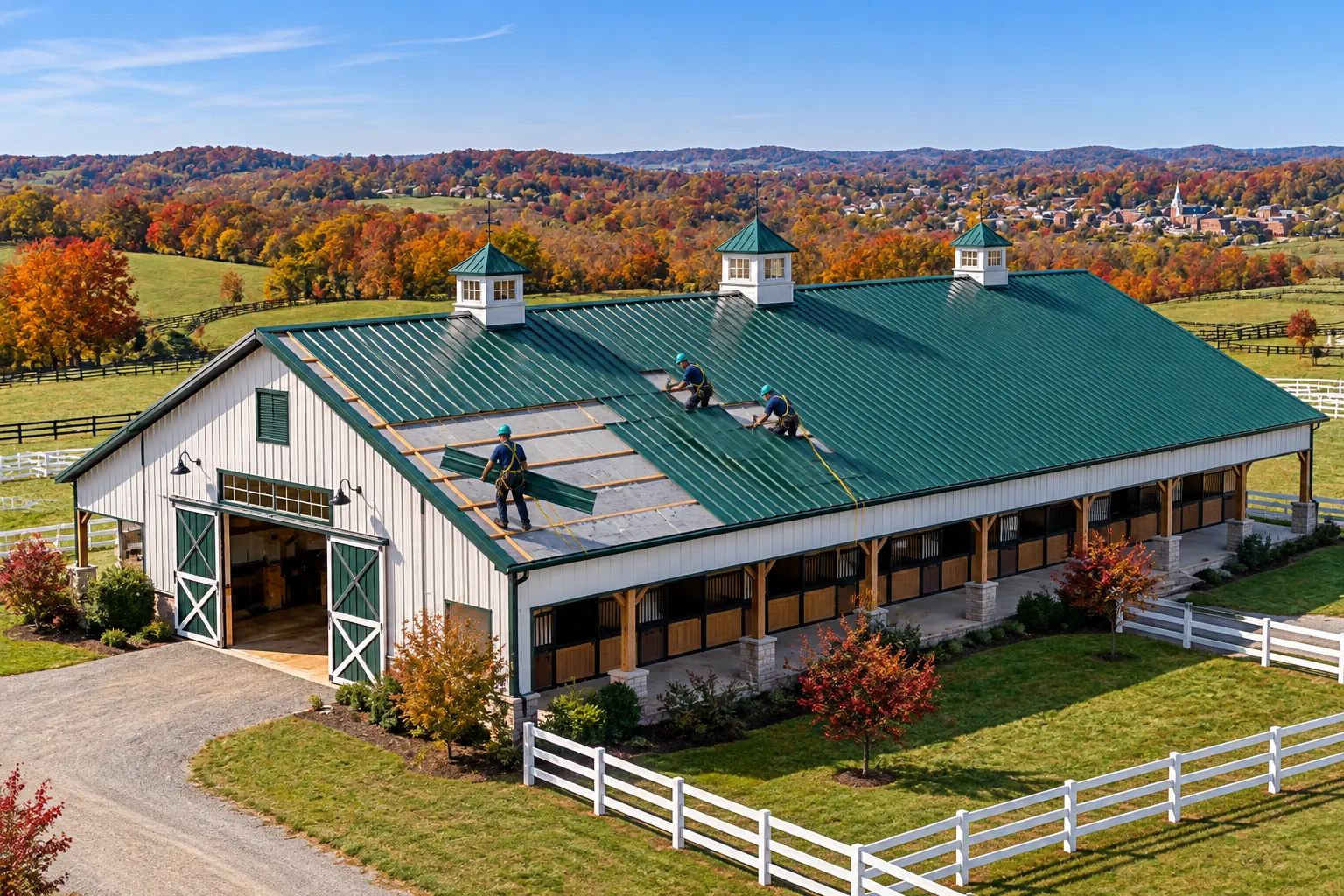
Metal roofing for shops and equipment buildings, with trim and gutters matched to the panels.
Fits: Steel buildings with real slope.
Call and tell us where the lines run and where the meter hangs. We plan crane and dumpster spots around them.
Tear-Off Steps
Calls first, then staging, then the roof.
We count roof layers, take core cuts, check the deck from inside, and note overhead lines, the meter, and the service entrance. A second recover layer on top means the whole roof comes off to the deck.
The utility named on the bill gets notice about the lines and service entrance. The Kentucky HBC gets the permit request with the roof area, system, insulation, and deck repair plan.
Crane position, swing path, and the dumpster spot are fixed once both calls are done, clear of lines and entrances, so roof materials and torn-off debris move without crossing the wires.
Each section is stripped to the deck, repaired, insulated, roofed, and sealed before the crew leaves, with the service entrance reflashed along the way.
Nearby Towns
Besides Camargo, we take commercial roofing jobs in Winchester, Mount Sterling, Jeffersonville, Carlisle, and Owingsville.
Outside that list? Simply call us or send us a message.

Camargo FAQ
The electric provider named on the building bill, and the East Kentucky Power Cooperative list shows Clark Energy serving Montgomery County. Give notice when the service entrance comes up through the deck, when the meter hangs on an eave wall, or when overhead lines run near the crane swing path.
The Kentucky HBC, since Montgomery County relies on the state office for building permits. Line up the permit and the utility call before scheduling the dumpster and crane.
Materials go up and debris comes down over the roof edge, and overhead lines often run near the building. The crane position and swing path are set clear of the lines, and the dumpster sits under the tear-off chute away from entrances.
Everything down to the deck: membrane, cover board, insulation, and any older recover layer underneath. Two existing layers rule out another recover, so both come off, and the bare deck is walked and marked for any rusted steel before new insulation goes down.
Usually not. Each section is dried in and sealed before the crew leaves for the day. Noise, dust, and deliveries are the main effects inside, and covers go over inventory below any deck repair.
Then the roof lift moves to another side of the building or uses a different setup that keeps the swing path clear. The utility named on the bill is asked about the lines before the plan is fixed, and the dumpster follows wherever the tear-off chute ends up.
Send the address and where the power lines run. We plan the tear-off from the ground up.