Phased Tear-Off Over Production
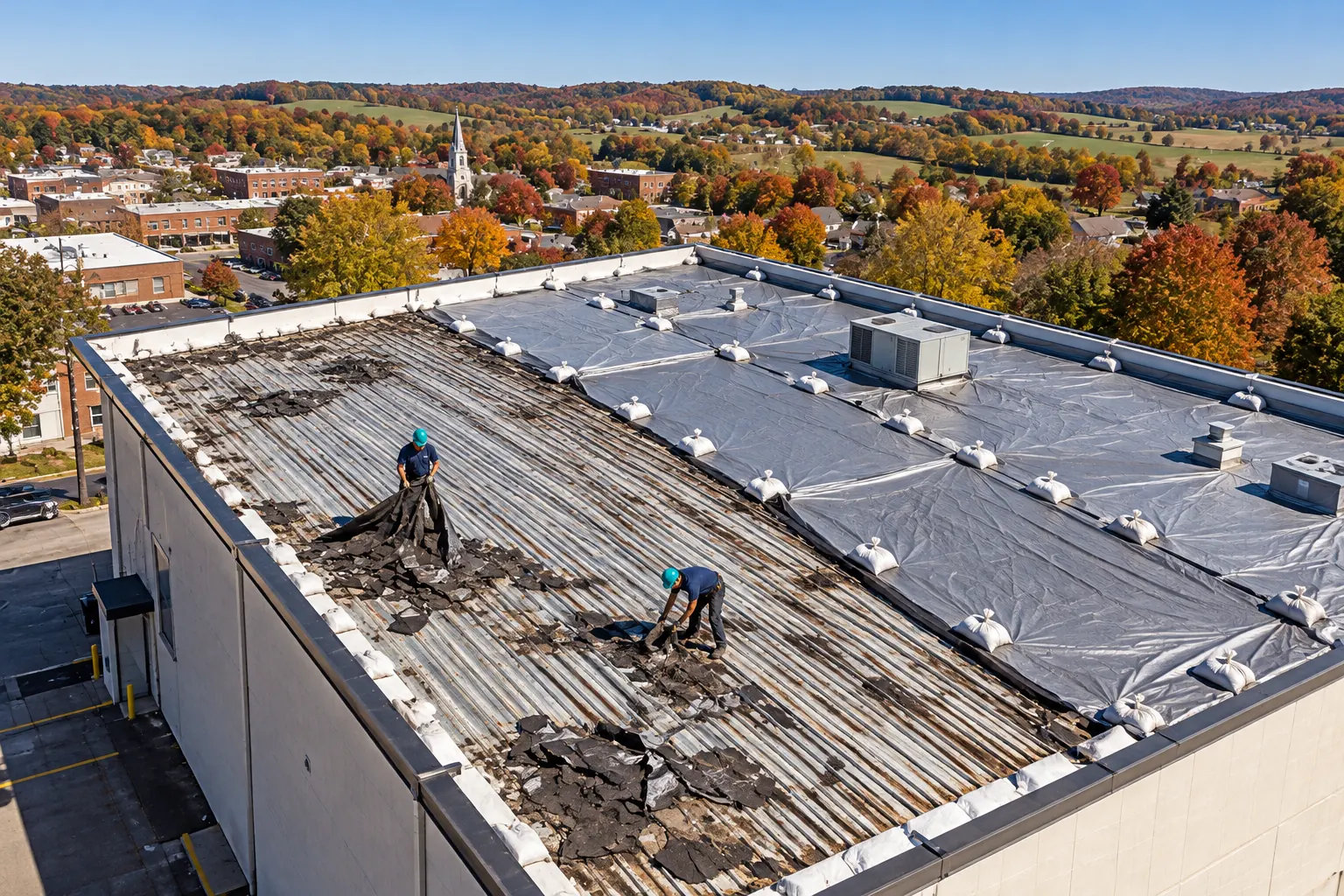
Each section is torn off, dried in, and sealed before the crew leaves, and rusted deck is cut out and replaced before insulation goes down.
Fits: Operating plants that cannot shut lines down for a reroof.
Industrial Roofing
Plants call on a Winchester industrial roofing contractor when the roof carries exhaust, heavy equipment, and daily foot traffic, and production below cannot stop.
Your First Visit
Is This Roof A Fit?
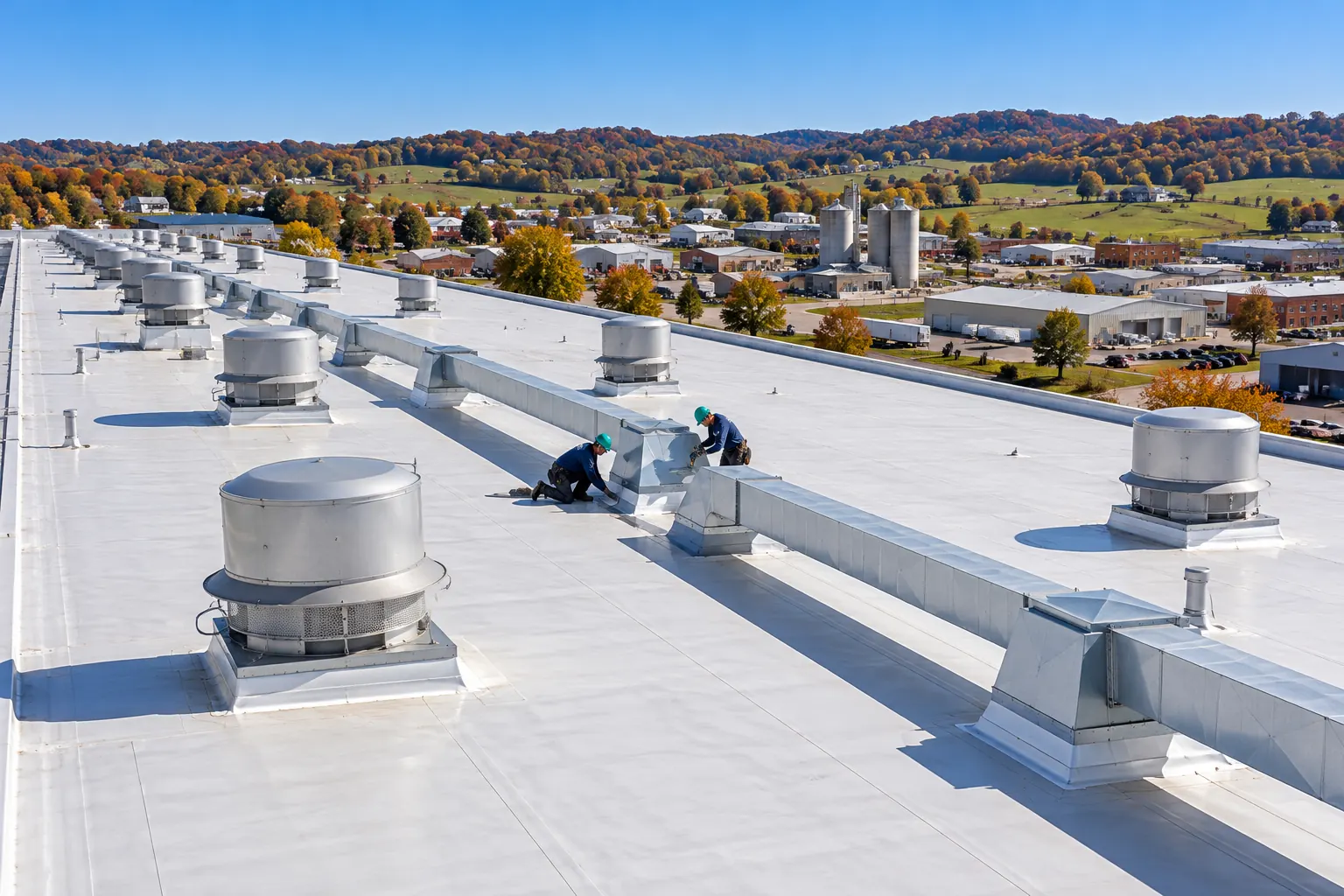
A Winchester industrial roofing contractor matches the membrane to what lands on the roof, starting with what each exhaust fan discharges.
Plant staff can usually name the oils, solvents, or dust each fan discharges. That substance is checked against the membrane maker's chemical resistance chart.
Plant Roof Trouble
Plant roofs wear in patterns tied to the equipment on them. These are the places we check first.
Streaks below scuppers that drain an area around process vents.
Supports settling into soft insulation under conduit and gas lines.
Leaks over clean rooms or lines that force equipment covers.
Vibration and slow leaks rust steel decks over process areas.
Curbs too short for proper flashing once new insulation is added.
Grease or vapor breaking down the sheet around exhaust outlets.
Foot traffic wearing the field where no walkway pads were laid.
Plant Roof Options
An industrial roof is built around its loads, its exhaust, and the people who walk it each week.
Each section is torn off, dried in, and sealed before the crew leaves, and rusted deck is cut out and replaced before insulation goes down.
Fits: Operating plants that cannot shut lines down for a reroof.
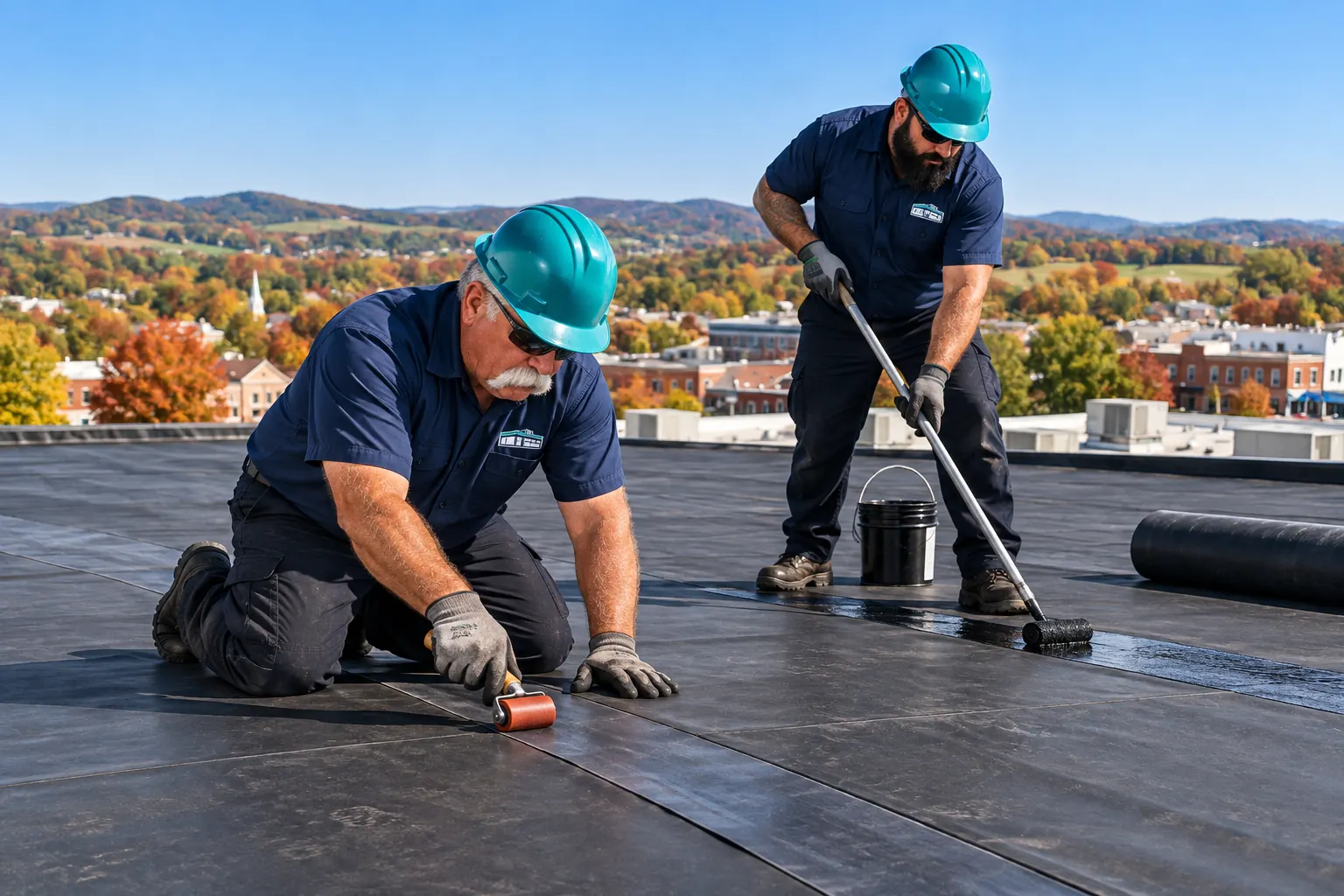
Low curbs are raised to meet the membrane maker minimum flashing height, and pipe supports go on pads that spread their weight.
Fits: Roofs with heavy units, rails, and pipe racks.
Layers of polyiso, often tapered, carry water to drains, and a high-density cover board protects them under carts and constant foot traffic.
Fits: Large roofs with low bays and frequent maintenance visits.
Benefits
A plant roof designed around its equipment protects the work happening underneath it.
The Main One
Phased sections, overhead protection where deck repairs happen above workers, and shutdown windows set with plant staff keep lines covered and running while the roof above them is replaced.
Grease and process vents get a sheet that resists what they discharge.
Raised curbs leave room for full-height flashing on every rooftop unit.
Walkway pads link the roof hatch to each unit that needs service.
Call with the area of the plant, the equipment above it, and your shutdown windows. We plan the roof visit around your shifts.
Plant Roof Steps
Plant roofs get planned with the people who run the building.
We walk every fan, curb, rail, and pipe rack, check the deck from below over process areas, and take core cuts where insulation feels soft underfoot. Rust over process areas is marked so deck repair can be planned into each phase.
Plant staff name what each fan discharges, and the membrane is checked against the maker chemical chart. Sacrificial pads or grease boxes go under the worst fans.
Shutdown windows for units serving clean rooms, hot work rules near combustible insulation, and crane and truck routes that avoid docks during shifts are set before work starts.
Each area is torn off, deck repaired, insulated, and sealed before the crew leaves. Curbs are raised and walkway pads link the hatch to each unit.
Related Services
Many plants have more than one roof type on the same campus.
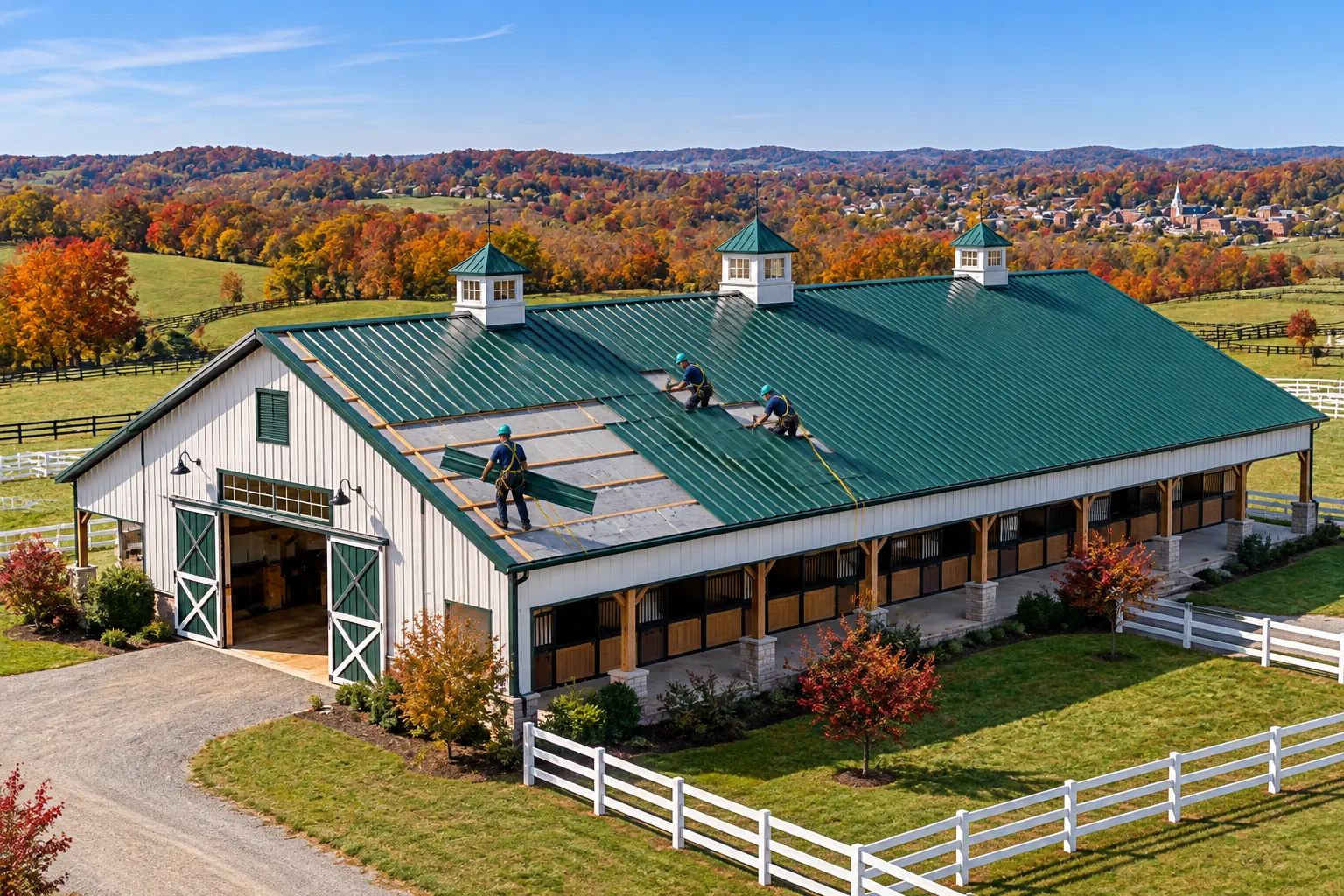
Steel production buildings and warehouses often carry metal panel roofs beside membrane sections.
Metal roofing for plant buildings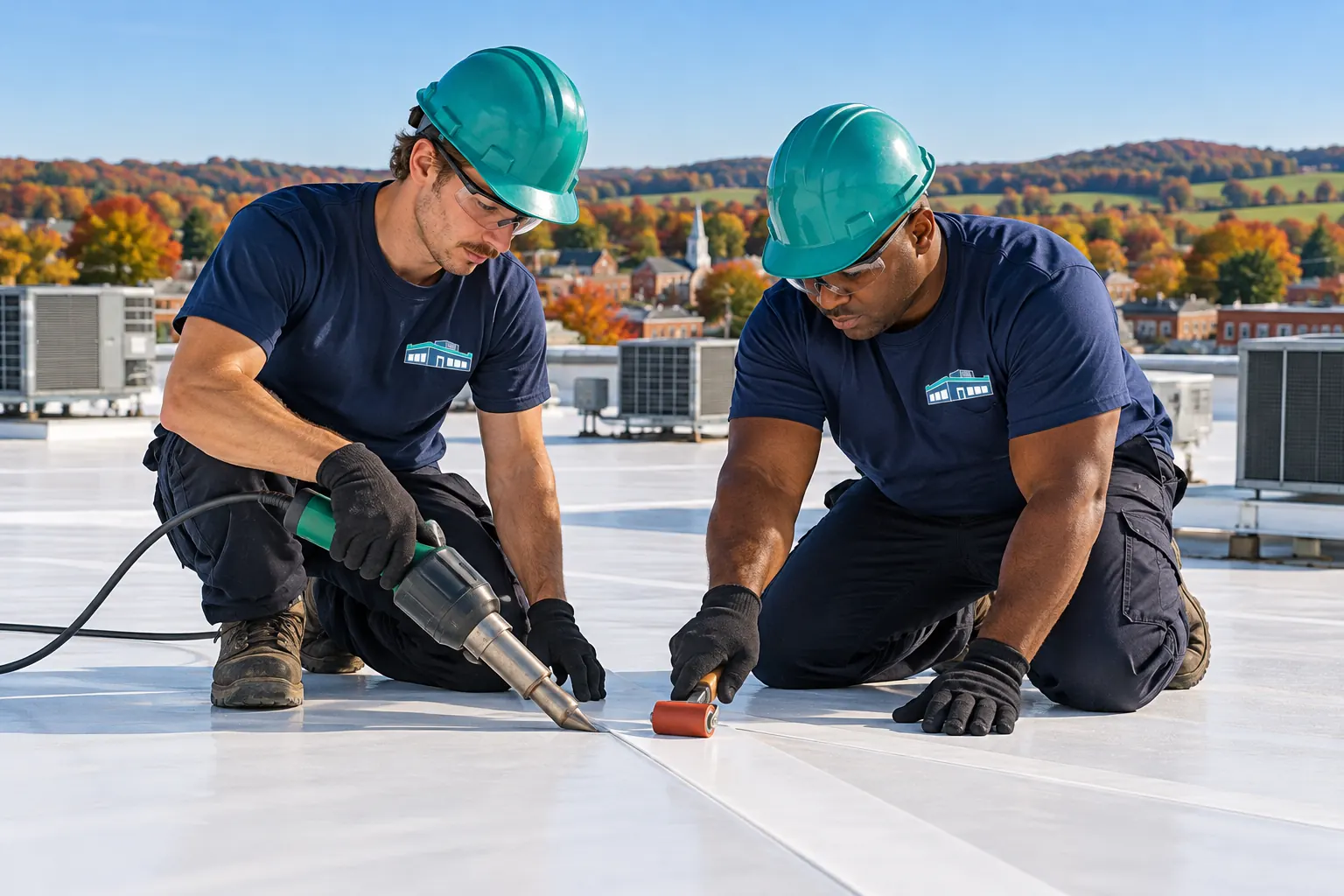
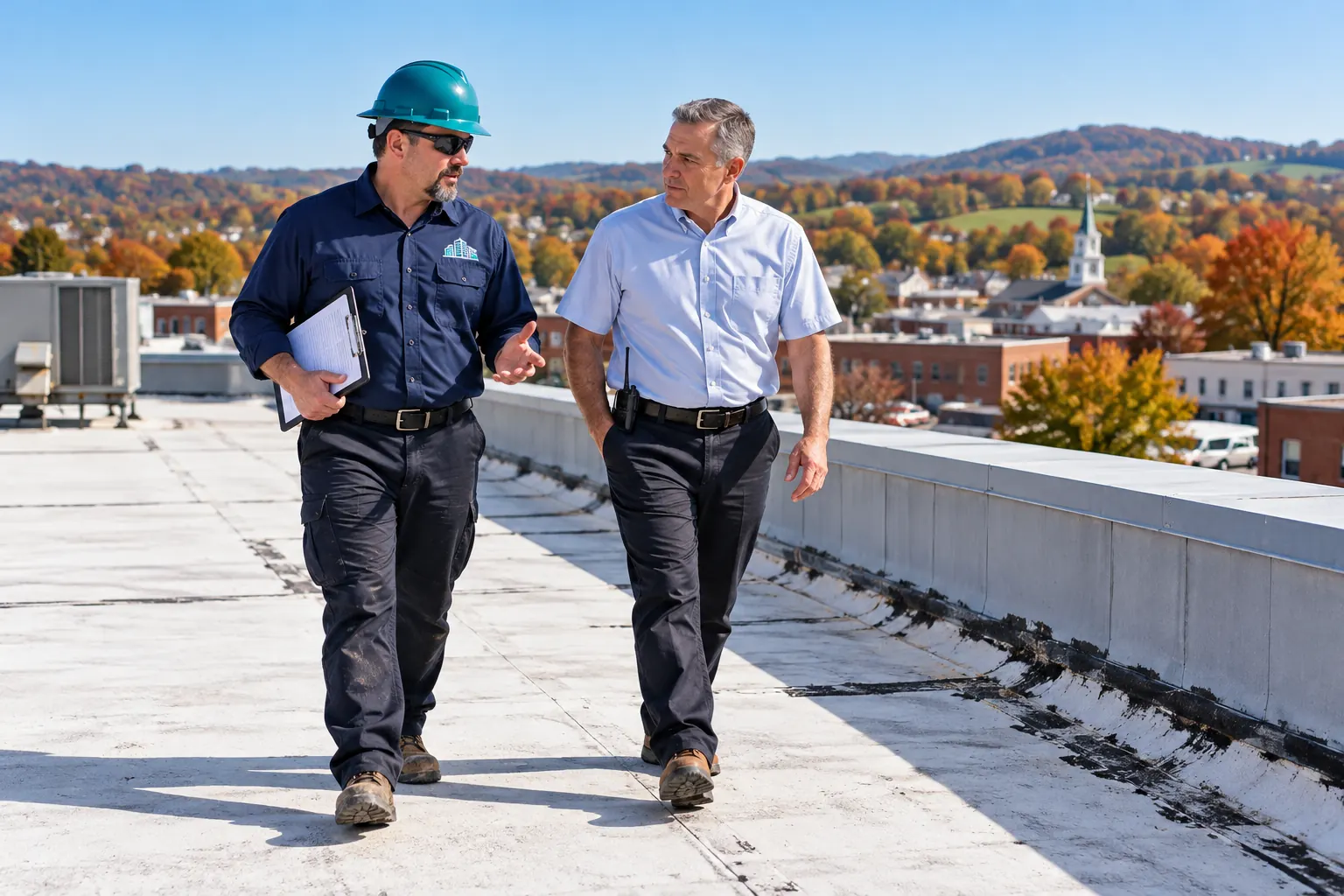
Leaks over a line can be repaired first while the full roof is planned.
Plant roof leak repairIndustrial FAQ
The loads. Industrial roofing in Winchester, KY deals with exhaust fans, heavy units on curbs or rails, pipe racks, and weekly maintenance traffic on top of normal weather. Membrane choice, walkway layout, flashing at each penetration, and insulation strength are all chosen around those loads, and the deck gets closer attention.
PVC and KEE-based membranes resist grease and many chemicals better than TPO or EPDM. Choosing a roof membrane for exhaust fans and chemicals starts with what actually lands on the roof, then the maker resistance chart. Sacrificial pads or grease boxes catch drippings at the worst fans.
In phases, with each section torn off, dried in, and sealed before the crew leaves. A roof replacement over an operating plant also plans shutdown windows for units serving process areas, hot work rules, overhead protection under deck repairs, and crane routes that avoid loading docks during shifts.
Units sit on curbs or rails that carry the weight to the frame, and the new membrane is flashed up each support. Curbs that end up too low once new insulation is added get raised to the maker minimum flashing height. Pipe supports sit on pads, and walkways connect the hatch to each unit.
Layers of polyiso, often tapered, so water runs to drains and scuppers. Tapered insulation for a large industrial roof works with crickets around curbs, drain sumps, overflow scuppers in case a drain clogs, and gutters at the edge. A high-density cover board protects it under carts and foot traffic.
Yes. A leak over a line is traced and repaired with matching membrane first, often with equipment covered below while the crew works. Core cuts around it show how far water has spread, and that finding helps decide which plant roof section gets replaced first.
Send the plant address and the equipment on the roof. We plan the inspection around your shifts.